
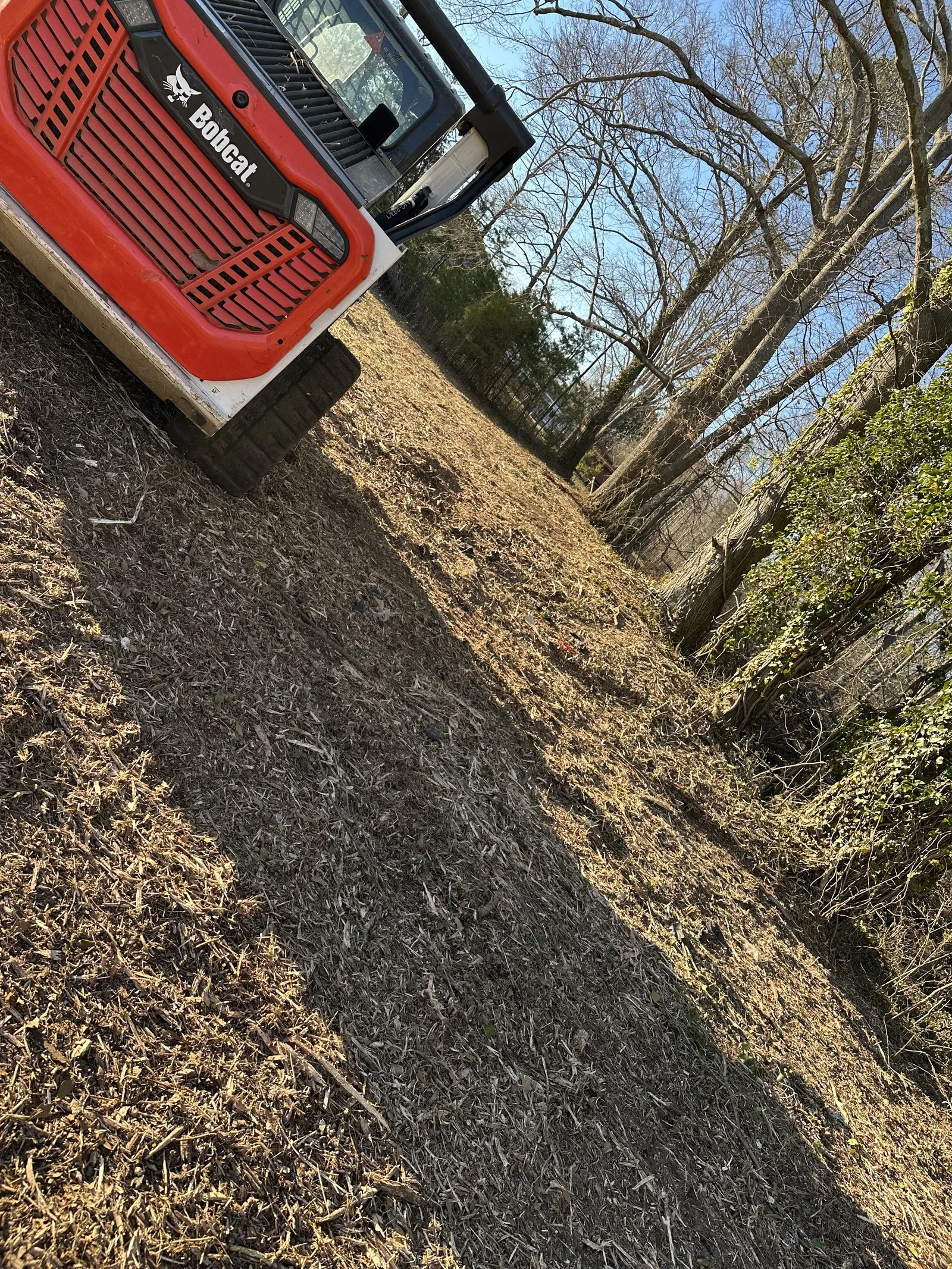
Forestry Mulching
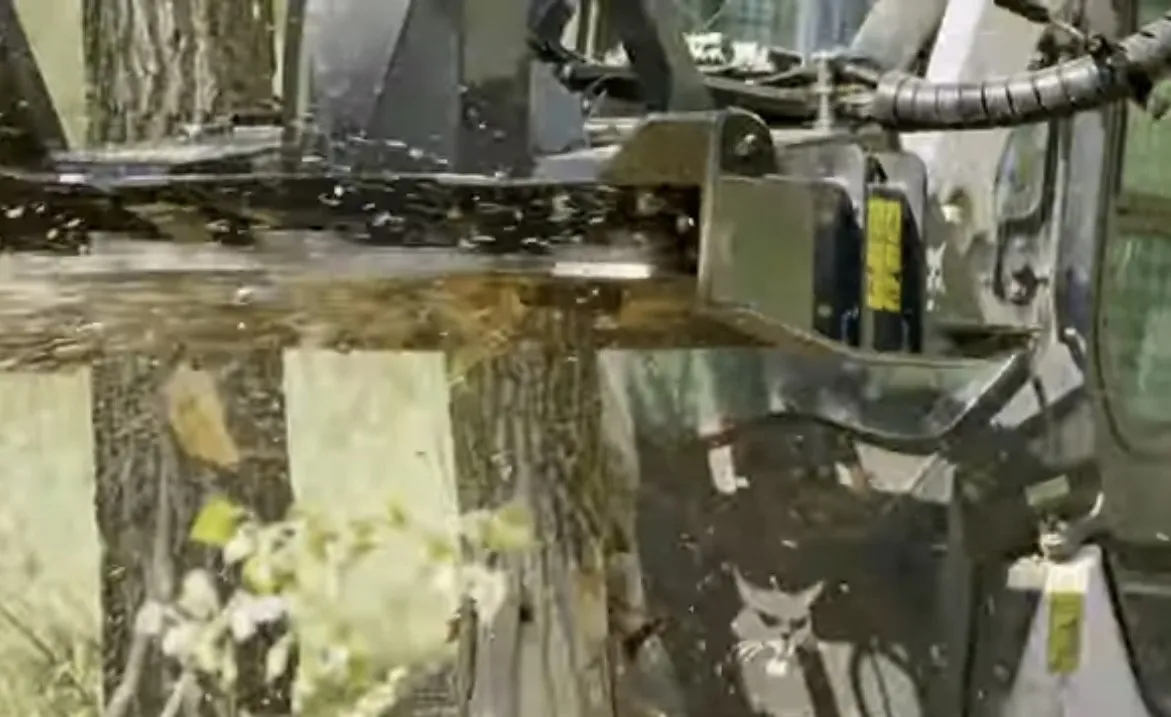
Forestry mulching grinds brush and small trees into a mulch layer where they stand. Nothing gets hauled off and nothing gets burned.
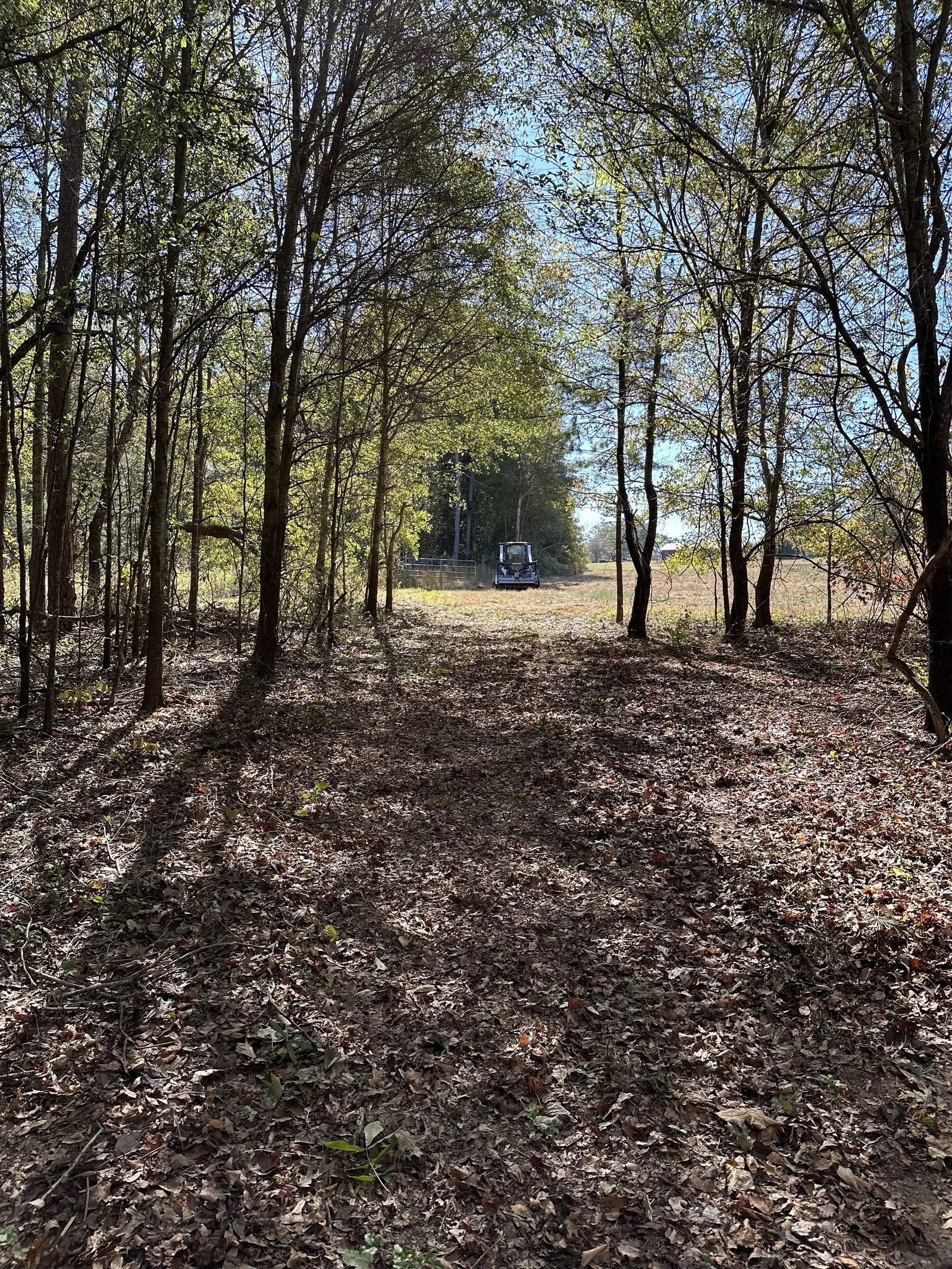
Hunting land clearing and food plots around Shelby, NC start with a spot you already have in mind. You flag it. We take out the brush, saplings, briars and vines and leave open ground you can plant. A tracked forestry mulcher does most of that work. It grinds the stems into a mulch mat right where they stood. The mat holds the dirt in place through a summer storm. There is more on the forestry mulching method if you want the detail.
We prepare the ground and you put the seed down. Seed, lime and fertilizer stay with you or your seed supplier. The plot runs on your budget and your date. Most of what we do here is food plots, shooting lanes, hunting trails and side by side trails. We also reopen access lanes and old logging roads that grew shut. Firebreaks and fire lanes get mulched or opened down to bare dirt. Existing plots and lanes get mowed back when they close in.
Tell us about your land and we’ll get right back to you.
Work backward from opening day. North Carolina's 2026-27 archery season opens September 12 in every zone. Cleveland County sits in the Northwestern deer zone. Blackpowder runs November 7 to November 20 there, and gun season opens November 21. Statewide youth days fall on September 26 and 27. NC Cooperative Extension puts the best cool-season planting window at late August to mid September. Extension also says to break and disc the ground several weeks ahead so rain settles it. That pushes the clearing work into early or mid summer.
Summer clearing leaves room for the rest of it. NC Cooperative Extension says late summer is a good time to send a soil sample. The state lab is less busy then. Lime needs weeks in the ground to move pH, so the earlier a plot is open, the better that goes. We clear plots and lanes around Lawndale, Grover, Boiling Springs and Rutherfordton, and across Cleveland, Gaston, Lincoln and Rutherford counties. Call and we come look at the ground, then set a date after the estimate.
You mark the line and we cut it. Flag from your stand out to where you want to see, and we run the mulcher down that line. Brush, briars and small stems go into the ground. The big oaks and hickories stay standing. Anything too heavy for the mulcher head comes down with a machine from the ground. That is our tree removal work. We keep the cut tight near the stand and open it wider at the far end. The lane widens where the shot gets long.
NC State Extension puts Cleveland County at about 47 percent forest, so most lanes here run through mixed hardwood. What comes back matters as much as what comes out. Loblolly pine and cedar do not sprout from the stump. Sweetgum throws dozens of root sprouts, and privet does the same. Plan on mowing a mulched lane in its second season to hold that back. Where a lane runs near a power line, state law keeps equipment 10 feet off a high-voltage line. The utility also gets 48 hours notice before work starts.
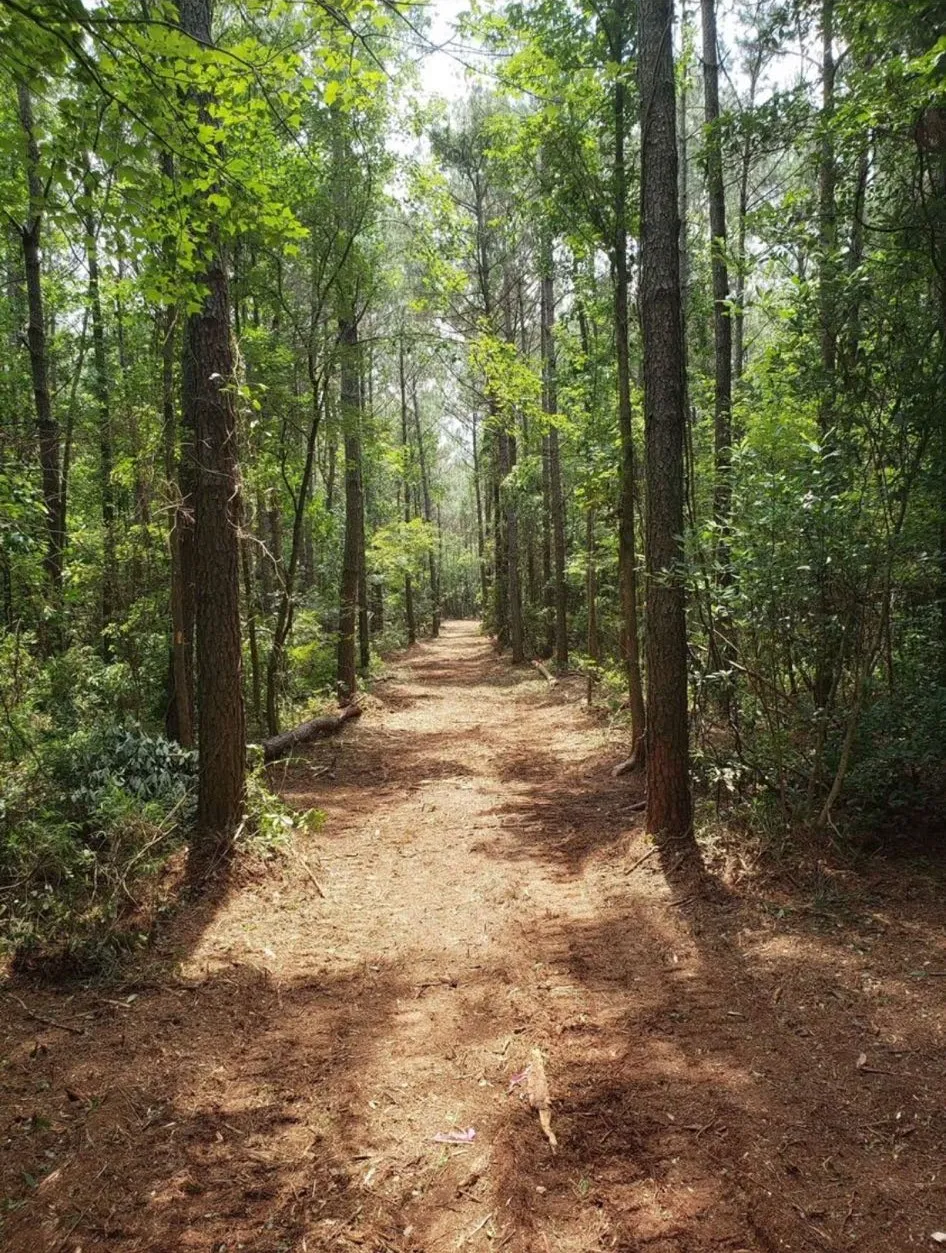
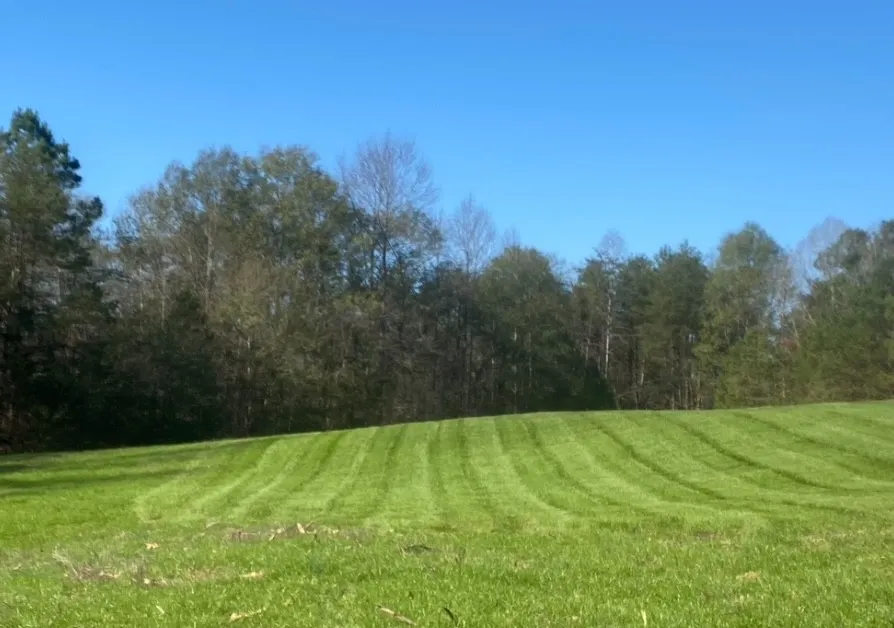
A trail does two jobs. It gets you to the stand without crashing through brush. It also gets a side by side in to pull a deer out. We mulch the trail at the width your machine needs. After that it takes one mow a year to hold. Old logging roads are usually the quickest way in, because the grade is already cut. We grind the sweetgum and privet off the roadbed and take out the leaners hanging over it. The yearly upkeep is a mowing job, and that is our bush hogging service.
Firebreaks come up a lot on foothills tracts. The NC Wildlife Resources Commission manages South Mountains Game Land, 21,647 acres across Rutherford, Burke, Cleveland and McDowell counties. About 76 percent of it is forested, and roughly a quarter is held in early successional habitat with prescribed fire. Private tracts nearby run the same idea at a smaller scale. A mulched fire lane leaves the ground bare and the debris flat. State burn rules still apply to any pile you light. The NC Forest Service appraised 42,587 acres of Hurricane Helene timber damage in Rutherford County. Downed trees still block old lanes out that way.
Stem size, density and distance set the price. A lane through young pine moves fast. The same length through mature hardwood loaded with vines takes far longer. Slope, wet ground and rock slow a machine down. Rock can sit a foot or two down toward the foothills. Three plots on one tract cost less than three separate trips. We price the whole tract at once when we can. We look at the ground on a free estimate, then set a date once you say go.
Free, no-obligation estimates across Shelby, NC and 25 miles around.
(704) 600-8146From the first call to the last pass of the rake, here is how it goes.
Tell us where the land is and what you want it to do. We set a time to come see it, usually within a few days.
We look at the ground, the growth and the access in person. You get a real number and a plan before any machine moves.
Our own equipment rides in on our lowboy. Most residential jobs run one to three days, and you see progress the first morning.
Debris is mulched or hauled off and the ground is left ready to use. We look the job over with you before we leave.
Common questions about hunting land & food plots across Shelby, NC and 25 miles around. Don't see yours? Give us a call and ask.
Forestry mulching grinds brush and small trees into a mulch layer where they stand. Nothing gets hauled off and nothing gets burned.
Bush hogging for fields, pastures and overgrown lots around Shelby, NC. Our rotary cutters take down waist high growth, briar and small saplings, and put the ground back in shape.
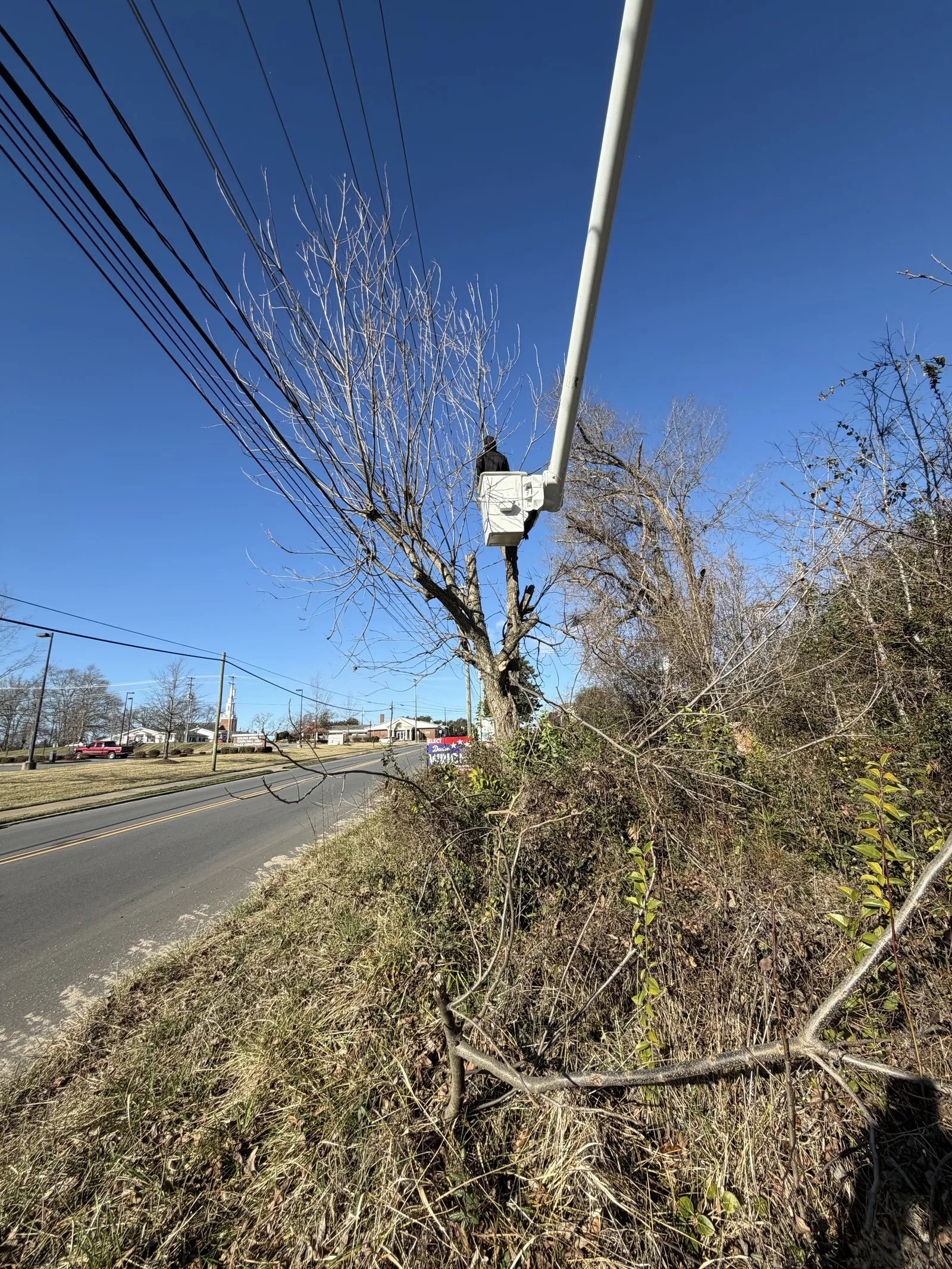
Tree removal in Shelby, NC for leaning, dead and storm-downed trees. We drop them with machines and haul the wood off.
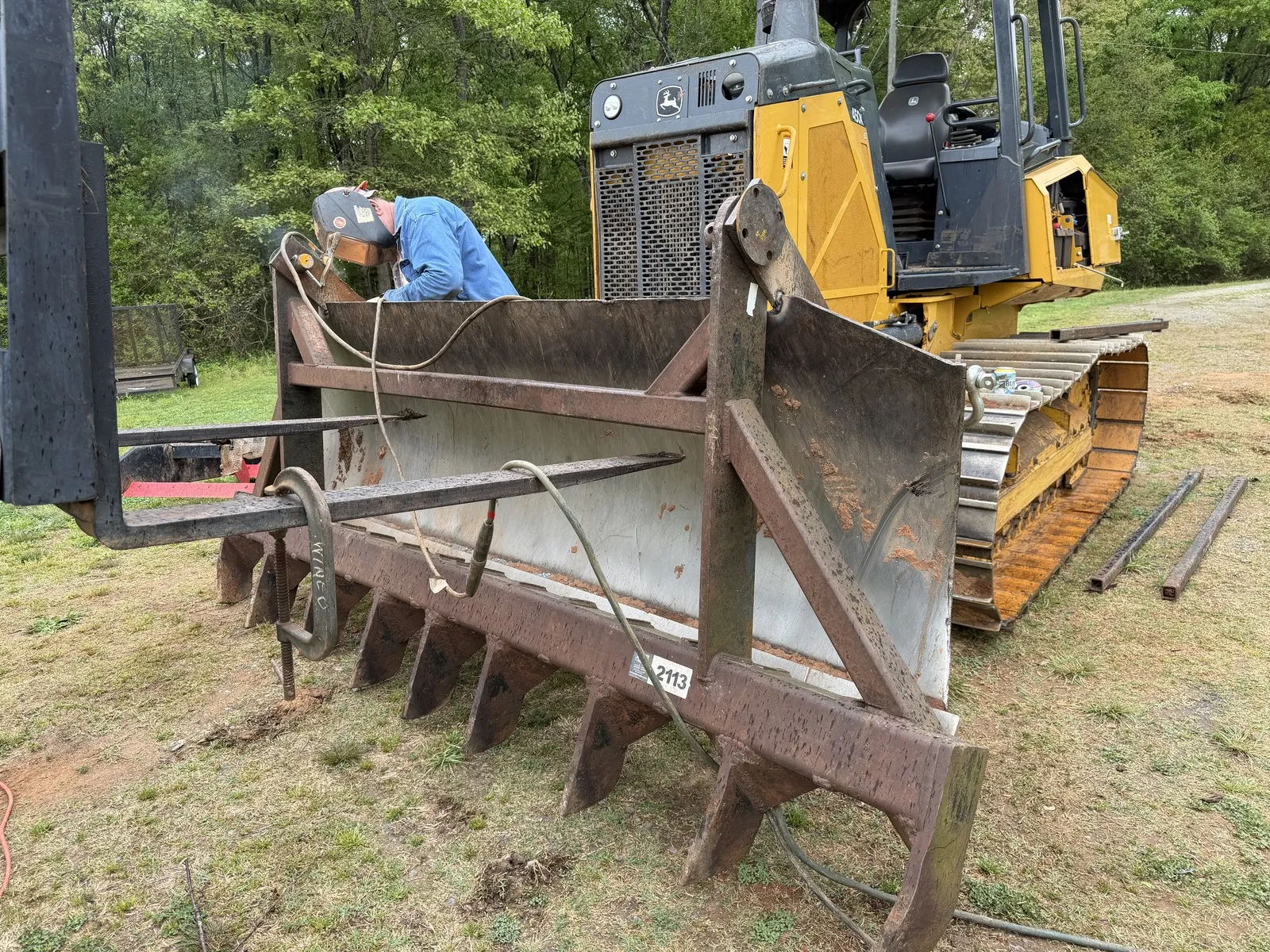
We grind stumps below grade so the spot can be mowed and seeded. When the ground has to be build-ready, we pull the stump and its roots out.
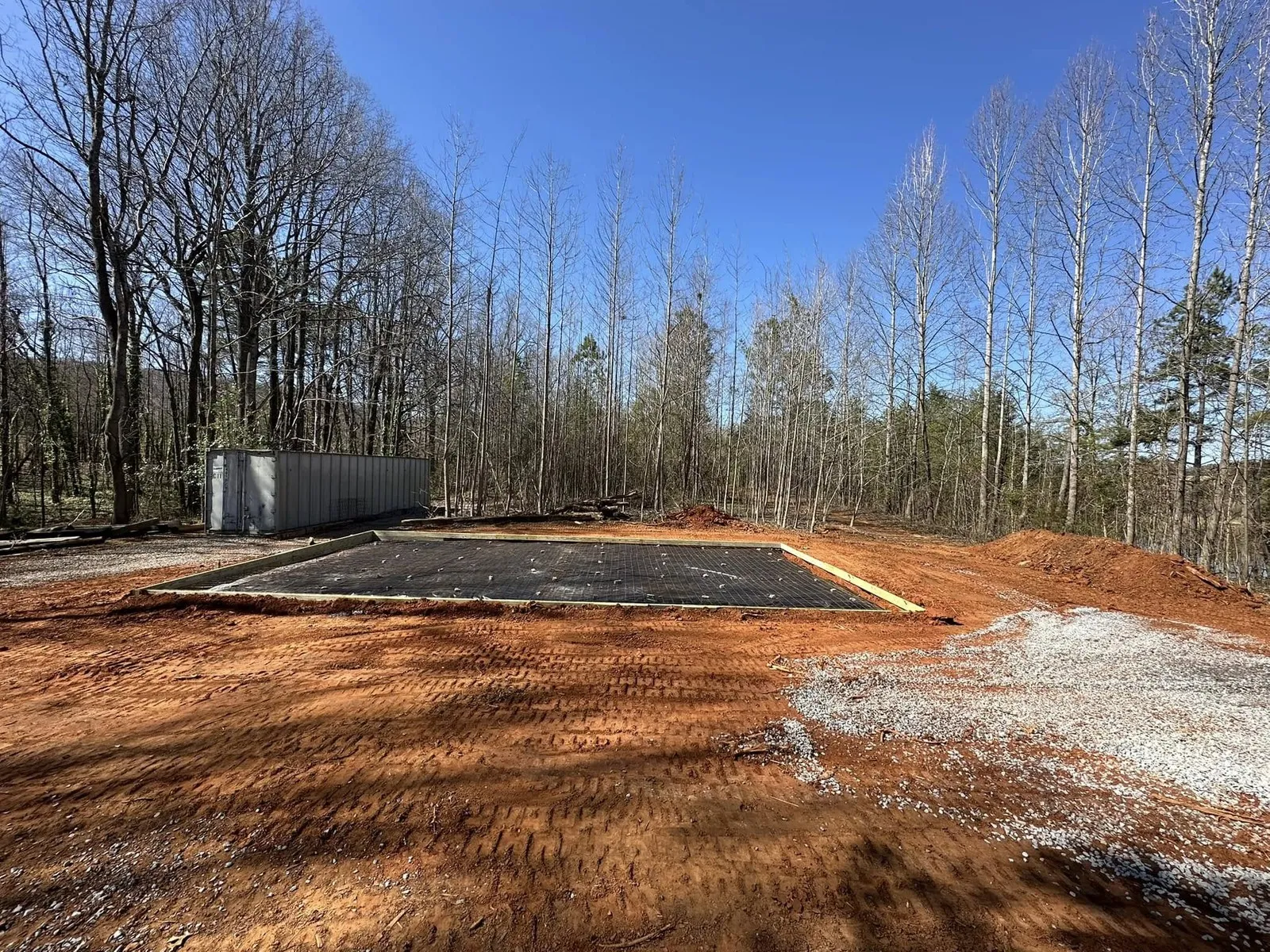
Land grading in Shelby, NC. We cut, fill and compact so your yard, pad or gravel drive sits flat and sheds water instead of holding it.
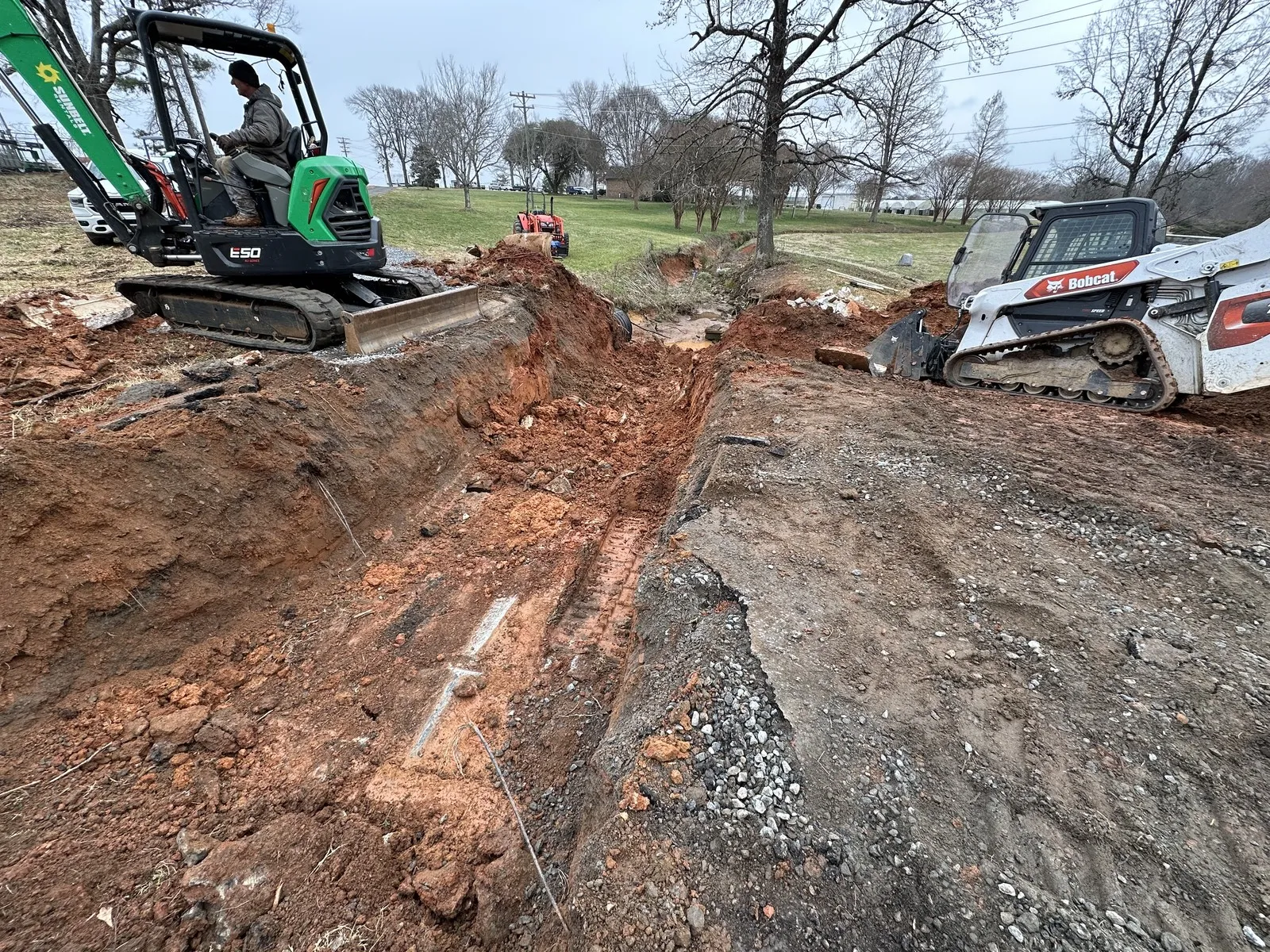
Excavation around Shelby, NC. Footings, driveway culverts, drainage trenches, pond banks and site prep, with the spoil hauled off in our grapple trucks.
LDS Solutions runs the way a veteran-owned company should: show up on time, do the work right, leave the place better than you found it. Our own crew runs our own machines.
Tracked mulcher, skid steers, excavators, dozer and grapple trucks, all owned. Your job never waits on a rental yard, and the right machine is always on the trailer.
We come look at the ground in person, tell you what the job takes, and give you a real number before any machine moves. The estimate costs you nothing.
Red clay that ruts when wet, pine and privet that come back every summer, foothill slopes that shed rain sideways. We work this ground every week and plan for it.
Most forestry mulching in North Carolina runs $1,000-$3,500 per acre. What light, medium and heavy growth cost, how day rates work, and when mulching is wrong.
Read more →Bush hogging runs about $50-$250 per acre depending on growth, with most visits carrying a minimum. How pricing works and the mowing schedule that keeps fields open.
Read more →Forestry mulching grinds growth in place for $1,000-$3,500 per acre. Traditional clearing strips to bare dirt for $3,000-$6,000+. How to pick the right one.
Read more →Land to clear, a field to mow, trees down from a storm, or a building that needs to come down? Call or send the form. We come look at the ground in person and the estimate is free. We clear land. You build dreams.
Tell us about your land and we’ll get right back to you.