Forestry mulching vs traditional land clearing: which does your property need?
Forestry mulching and traditional land clearing solve the same problem two different ways. Mulching grinds trees and brush in place and typically costs $1,000 to $3,500 per acre in North Carolina. Traditional clearing strips the land to bare dirt, roots out, for roughly $3,000 to $6,000 or more per acre. The right choice comes down to what you want the ground to do next.
We run both methods every week around Shelby, so this comparison is from the machine seat, not a brochure.
How each method works
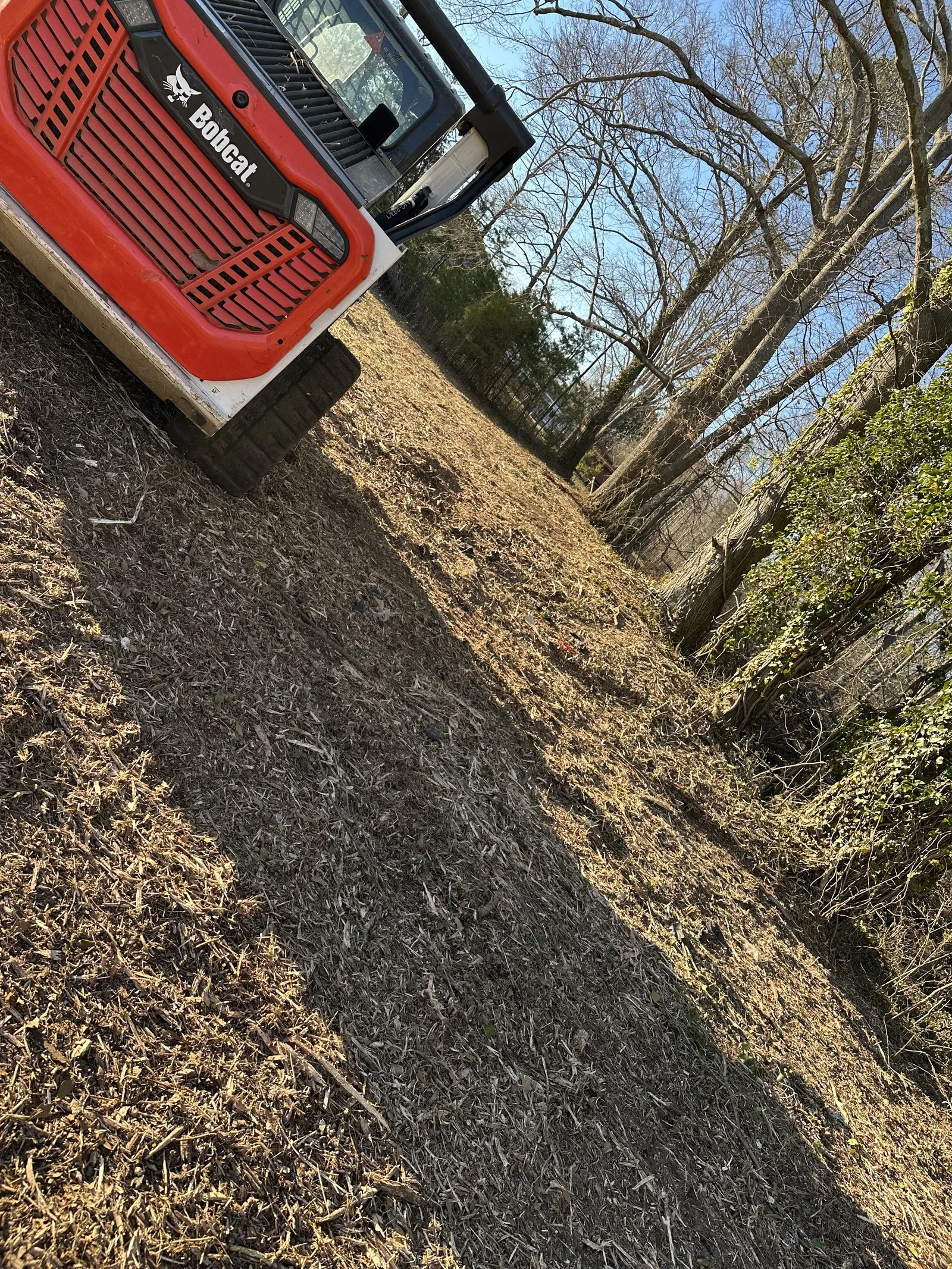
Forestry mulching is one tracked machine with a grinding head. It chews standing brush and trees into chips and lays them down where they fell. Nothing gets hauled, nothing gets burned, and the topsoil stays put. Stumps get ground near flush, but roots stay in the dirt.
Traditional land clearing is a crew of machines. The dozer and excavator push the growth out, the root rake pulls stumps and roots, and grapple trucks haul the debris off. What is left is bare, workable dirt that can be graded and built on.
Side by side
| Forestry mulching | Traditional clearing | |
|---|---|---|
| NC cost per acre | $1,000 to $3,500 | $3,000 to $6,000+ |
| Pace | 0.5 to 2 acres per day | 1 to 3 acres per day (dozer) |
| Debris | Stays as mulch, no hauling | Hauled off or burned |
| Stumps and roots | Ground near flush, roots stay | Pulled out completely |
| Ground after | Chip-covered, walkable | Bare dirt, build-ready |
| Erosion on red clay | Mulch layer holds soil | Bare soil needs cover fast |
| Best tree size | Up to about 6 to 8 inches | Any size |
For the per-acre breakdown by growth type, day rates and minimums, see what forestry mulching costs in North Carolina.
When forestry mulching wins
Pick mulching when you want the land opened up but not stripped. That covers most of the calls we get.
- Hunting land. Shooting lanes, food plots and trails, with the big oaks left standing.
- Overgrown pasture and fence lines. The growth is gone, the soil stays, grass comes back.
- Selective clearing. The machine works one stem at a time, so you keep the trees you want.
- Slopes and erosion-prone ground. Piedmont red clay washes when it is bare. The chip layer holds it while things regrow.
One caveat we give every customer: mulch slows regrowth, it does not stop it. Privet resprouts from cut stumps unless it is treated. Plan on a maintenance pass or a treatment if invasives are the problem.
When traditional clearing wins
Pick full clearing when the ground has a job to do.
- Building sites. A house pad, shop or driveway cannot sit on buried roots. Wood left in the ground rots and settles.
- Big timber. Past mid-size trees, mulching gets slow. Dropping and hauling is faster and cheaper.
- New pasture or crop ground. Roots out means you can disc, seed and mow without surprises.
- After demolition or major storm damage. Mixed debris has to leave the property anyway.
Full clearing usually pairs with stump grinding or removal and finishes with grading so the ground sheds water.
The permit question applies to both
Method does not change the rule. In North Carolina, disturbing more than one acre for development needs an approved erosion and sedimentation control plan before work starts, whether the machine is a mulcher or a dozer. Farm and forestry work is exempt. The details are in our NC land clearing permit guide.
The honest answer: many jobs use both
A typical tract around Cleveland County gets mulched where the owner wants cover and cleared to dirt where something is getting built. Because we run the mulcher, the dozer, the excavator and the grapple trucks ourselves, you are not hiring two contractors to get one property done.
Tell us what you want the ground to do, and we will tell you which method fits. Estimates are free and happen on your land, not over the phone. Call LDS Solutions at (704) 600-8146.