
Stump grinding vs stump removal: which one do you need?
Stump grinding cuts the stump into chips below grade and leaves the roots in the ground, at about $100 to $400 per stump in published rates. Stump removal digs the stump and root ball out whole, usually a few hundred dollars more. Grinding fits lawns. Removal fits ground you plan to build on.
Here is how the two jobs differ, what each costs, and where the cheaper one turns out to be the wrong buy.
What actually happens in each job
A stump grinder is a cutting wheel with carbide teeth. It rocks across the stump and chews the wood into chips, working down until the stump sits 6 to 12 inches below the surface. The hole fills with chips, the roots stay in the dirt, and the lawn around the spot is untouched. Extension sources put natural root decay at several years to a decade or more.
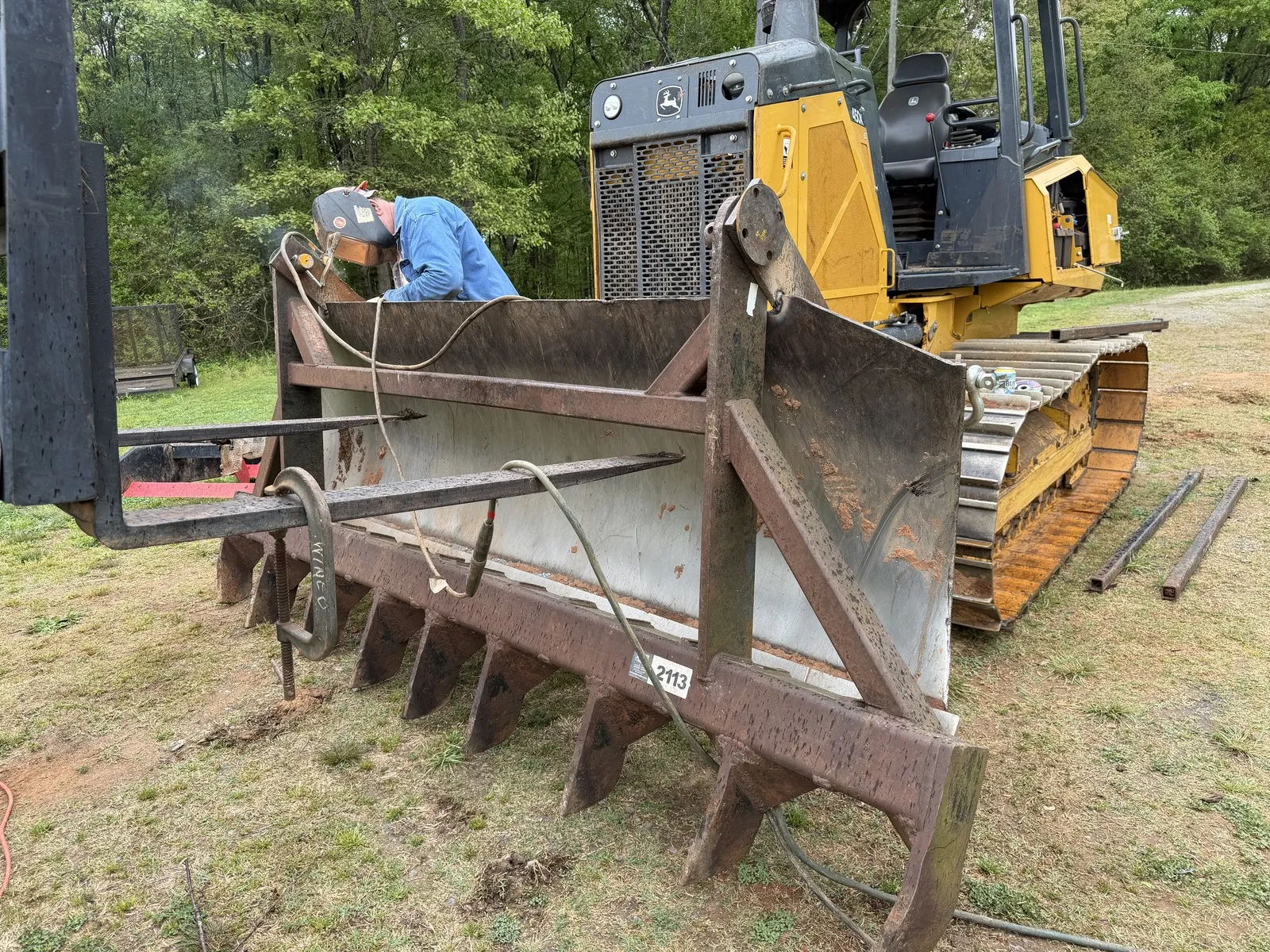
Full removal is excavator work. The machine digs around the stump, a root rake pulls the ball out of the ground, and the hole gets backfilled and packed. Nothing woody stays in the dirt. It costs more and leaves a bigger mark on the yard, which is why it only makes sense when the ground has a job to do next.
Our stump grinding service runs both machines. The grinder handles yard stumps, and the excavator and dozer with root rake come out when the roots have to leave with the stump.
What does each cost?
Cost guides publish steady numbers for this work. These are the ranges that repeat across them.
| Job | Published range |
|---|---|
| Grind one average stump | $100 to $400 |
| Per inch of stump diameter | $2 to $5, up to $6 in some guides |
| Each additional stump | $30 to $75 |
| Trip minimum | $100 to $150 |
| Dig out a 20 inch stump with roots | $370 to $675 |
| Large hardwood root balls | $500 to $1,100 and up |
Three things move the number. Diameter first, since pricing runs by the inch and a 36 inch oak holds several times the wood of a 10 inch pine. Count second, because the first stump carries the trip and setup, and every stump after it gets cheaper. Access third. A stump behind a fence or on a slope takes more care than one sitting in an open yard.
Those are market ranges, not our quote. A real number takes one look at the stump, and our estimates are free.
When grinding is the right call
Grinding wins on a finished lawn. The machine reaches the stump without tearing up the yard, one stump is often done in under an hour, and grass grows over the spot once the chips come out and soil goes in. It wins on count too. A lot with a dozen stumps grinds down fast, and per-stump discounts stack.
The chips are a choice. We can rake grindings back into the hole, or load them out. Mixed into soil they tie up nitrogen while they rot, so if you want grass the same season, the move is chips out and soil in.
Species matters as well. A loblolly pine stump stays down, since cut loblolly does not sprout from the collar or the roots. Grind a pine and you are done with it.
When the stump and roots should come out
Anything getting built over the spot settles the question. The North Carolina Residential Code requires the area inside foundation walls to be cleared of vegetation, topsoil and foreign material, and requires fill to be free of vegetation and compacted for uniform support. A ground stump fails that test twice, once for the chips and once for the root ball rotting under the slab. Wood rots, the ground drops, concrete cracks. NCDOT builds roads the same way: grubbing pulls the root mat and ball, and decayed stumps come out about 2 feet below the surface.
So for a building pad, a garage, an addition, a driveway or fence post footings, we pull the stump with the excavator, rake the roots out, and pack the hole with clean fill. Root balls and spoil leave on the same grapple trucks as our excavation work.
Septic is its own case. NC State Extension’s septic guidance keeps trees at least 25 feet from a drainfield because roots clog the lines, so stumps near tanks and lines usually come out roots and all.
Termites are the myth to clear up. NC State Extension notes that swarmers around a yard stump are not a sign your house is infested. The rule that matters is wood touching soil at the structure, and state pest guidance wants stumps and wood debris out from under and against buildings. A stump by the crawl space should go. One out by the fence line is a judgment call, not an emergency.
The sweetgum problem
Around Shelby the stump that will not die is sweetgum. The USDA notes a single parent tree can put up 40 or more stems from its root system, and sprouts show up within weeks of cutting. Bradford pear behaves the same way, and NC Extension’s standing advice is to treat that stump so it cannot resprout. When shoots are already standing in a ring around a stump, grinding the middle does nothing about the ring. We pull the roots instead.
Oaks and hickories mostly behave. Sprouting drops off as trunks get bigger, and big white oaks over 16 inches almost never come back. A ground oak stump in a lawn is usually the end of the story.
Red clay, 811 and permits
The ground here is Cecil red clay, the state soil of North Carolina. It digs best damp. Dry, it grips a root ball hard and comes up in chunks. Soaked, it ruts and smears, so we sometimes give it a day after a storm before pulling stumps. The useful part is that kaolinite clay barely shrinks and swells, so a backfilled, compacted hole stays put under whatever comes next.
Digging stumps out counts as excavation under North Carolina law, so NC 811 gets called first. Notice takes three full working days, the locate is free, and the marks are good for 28 calendar days. There is no permit just to grind or pull stumps on your own residential lot in Shelby or Cleveland County. The trigger worth knowing is disturbance over one acre, which needs a state erosion and sedimentation control plan, and Gaston County runs its own erosion program, so bigger jobs there start with the county.
One stump or a whole lot
A single backyard stump is a short visit, and we route those with nearby work to keep the price sensible. Cleared land is the other end of the scale. A lot can hold forty stumps after tree work, and that is machine work by the day. Our post on what tree removal costs in North Carolina covers the step before this one, and if brush, trees and roots all have to go at once, what land clearing costs per acre covers the whole job.
Get a number for your stumps
Count the stumps, note the wide ones, and call (704) 600-8146. We come out, tell you which stumps to grind and which to pull, and the estimate is free. LDS Solutions is veteran owned and works stumps across Shelby, Kings Mountain, Boiling Springs, Gastonia, Lincolnton and the rest of our 25 mile circle.