
How much does land grading cost in North Carolina?
Published cost data puts land grading at about $500 to $5,000 on average. HomeGuide gives that range, with small lawns at $500 to $1,000. Angi’s 2026 national average to level a yard is $2,176. Neither source is specific to North Carolina. A real number needs an on-site look.
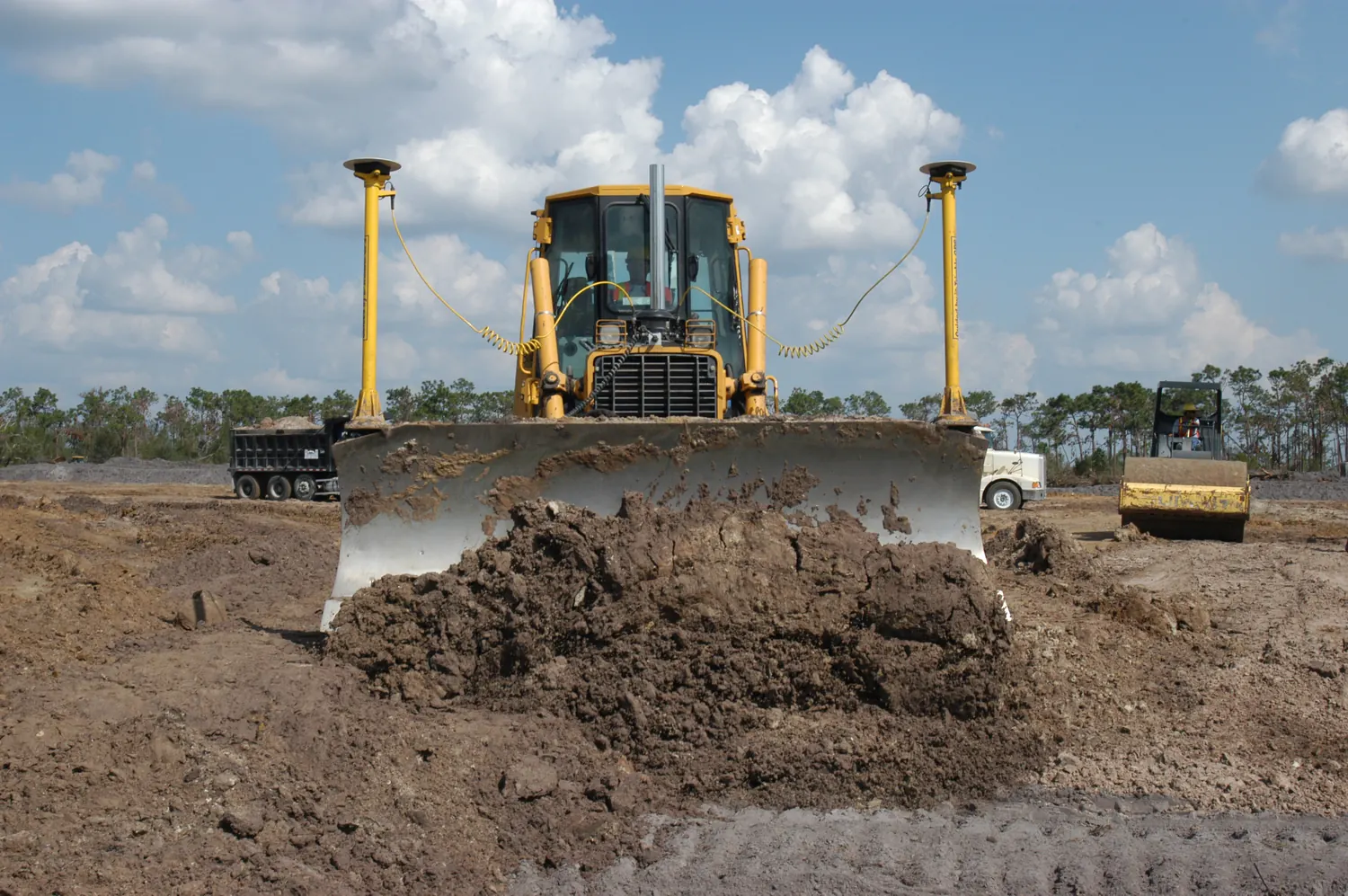
Neither figure is our quote. We do land grading and yard leveling around Shelby, and we price each job after we see the ground. A dozer cuts the rough grade. Tracked skid steers make the finish pass.
What does land grading cost by project?
Published cost data puts leveling for an above ground pool at about $200 to $850, per HomeGuide. Regrading around a house runs $1,000 to $3,000 in both HomeGuide and Angi. Flattening a slope runs $1,000 to $5,000 in both. A quarter-acre lot costs $4,400 to $10,900 in HomeGuide’s figures.
The table puts the two national cost guides side by side. Every figure is a published range from HomeGuide or Angi.
| Project | HomeGuide | Angi |
|---|---|---|
| Leveling for an above ground pool | $200-$850 | $200-$900 |
| Regrading one side of the foundation | $500-$1,000 | Not listed |
| Regrading around the house | $1,000-$3,000 | $1,000-$3,000 |
| Flattening a slope or hill | $1,000-$5,000 | $1,000-$5,000 |
| Driveway grading | $700-$2,500 | $1,500-$9,500 |
| Quarter-acre lot | $4,400-$10,900 | $4,200-$11,250 |
| One acre | $17,400-$43,600 | $17,000-$45,000 |
The guides split most on driveways. Angi’s figure is for regrading the average 640 square foot two-car driveway. HomeGuide also prices driveway grading at $3 to $8 per square foot. Our gravel driveway cost guide covers the stone side of that job.
How much does grading cost per square foot and per acre?
Published cost data puts land leveling at about $0.40 to $2.00 per square foot, per HomeGuide. Finish grading, which works the top 1 to 3 inches, runs $0.40 to $1.00. Rough grading, which removes slopes or contours a yard for drainage, runs $1 to $2 per square foot.
HomeGuide’s own table shows how that adds up by area.
| Area | Finish grading | Rough grading |
|---|---|---|
| 1,000 square feet | $400-$1,000 | $1,000-$2,000 |
| 5,000 square feet | $2,000-$5,000 | $5,000-$10,000 |
| 10,000 square feet | $4,000-$10,000 | $10,000-$20,000 |
By the acre, HomeGuide puts land grading at $17,400 to $43,600. Angi’s range for one acre is $17,000 to $45,000. HomeGuide notes that most residential grading projects are a quarter acre or less.
Some grading work is billed by the hour. HomeGuide says grading companies with a mini excavator or skid steer charge $100 to $300 per hour. Angi lists leveling labor at $40 to $180 per hour. Our excavator with an operator cost guide covers hourly and day rates.
What moves the price of grading on Piedmont red clay?
How much dirt moves, and how hard it is to move, sets most of the price. HomeGuide says grading cost depends on the yard size, soil type, slope and fill dirt needed. Around Shelby, the soil type is often red clay, and red clay changes with the weather.
Soil survey data from the USDA puts Pacolet and Cecil soils on more than 40 percent of Cleveland County. In the USDA’s typical profiles, red clay starts about 3 inches down in Pacolet and 8 inches in Cecil. The USDA describes the Cecil clay as firm and sticky. On both soils, a cut deeper than about 8 inches is a cut into clay.
Weather matters on clay. NOAA’s climate normals give Shelby 47.89 inches of rain in a normal year. NC State Extension tells farmers to avoid field operations when the soil is wet. Drier soils, it says, have higher strength and greater resistance to compaction. HomeGuide puts the best time to regrade in spring or fall, during dry weather.
The rest of the price comes from the job itself.
- Slope. Angi says contractors typically price grading work by the elevation change involved. HomeGuide says a steep slope needs more excavation and fill dirt.
- How much dirt moves. Grading contractors cut the high areas and use that dirt to build up low areas, per HomeGuide. Angi says the fill you need depends on how much can be moved from elsewhere in the yard.
- Fill dirt. When a yard needs more dirt than it has, the fill comes from a supplier. HomeGuide puts fill dirt at $5 to $25 per cubic yard, and Angi at $5 to $30. We spread and compact it once it is on the property.
- Volume. One cubic yard covers about 55 square feet at 6 inches deep, per HomeGuide. Raising a 1,000 square foot low spot by 6 inches takes about 18 cubic yards.
- Access. A fenced back yard may need a skid steer or a mini excavator in place of a dozer. Angi says clearing objects and debris before the crew arrives will reduce hourly labor costs.
- Clearing first. HomeGuide says land must be cleared before leveling. Angi puts land clearing at $1,300 to $5,700, depending on the number and size of trees. Our land clearing cost guide covers wooded lots by the acre.
What does it cost to level a yard for an above ground pool?
Published cost data puts leveling for an above ground pool at about $200 to $850, per HomeGuide. Angi’s range is $200 to $900. HomeGuide says the price depends on the pool size and yard slope. Flattening a whole sloped yard is a bigger job, at $1,000 to $5,000 in both guides.
Angi warns that uneven ground can lead to warped walls and liner damage. HomeGuide notes that experts recommend cutting the high areas down to match the lowest area. For stability, that beats adding dirt to raise the low side.
One customer had fought a sloped yard for an above ground pool for years. We graded it flat in a day.
What North Carolina rules apply to grading a yard or lot?
Two state rules matter most for grading. NC 811 gets notice three full working days before a machine digs, under G.S. 87-122. Under G.S. 113A-57, grading that disturbs more than one acre on a tract needs an approved plan. That erosion and sedimentation control plan is filed 30 or more days before work starts.
The same statute covers bare slopes. Slopes left exposed must be covered within 21 calendar days of finishing any phase of grading. Ground cover or erosion control devices both count under the statute. Plan the ground cover before the grading ends, so bare clay is not left open.
North Carolina’s residential code adds a drainage rule for homes. Lots shall be graded to drain surface water away from foundation walls. The grade shall fall at least 6 inches within the first 10 feet.
Check with the county or town about local permits before a big job. Our land clearing permits guide covers the one-acre rule in more detail.
How does a land grading job work?
A grading job starts with a free on-site estimate. We come look at the job, then price it and set a date. HomeGuide notes that grading companies require an onsite visit to provide an accurate estimate. The work runs in order: rough grade, compaction, finish grade, then a drainage check.
The look comes first. We check where water stands now and where it should go. If trees or brush still stand on the lot, clearing comes before grading. Our grapple trucks haul the brush off.
Rough grading moves the bulk of the dirt. The dozer cuts the high side and pushes that dirt into the low side. On a tight lot, tracked skid steers or a mini excavator do the same work.
Fill gets packed in layers, so it does not settle into a dip later. Then a skid steer makes the finish pass over the top few inches. The last check is drainage. The finished grade should fall away from the house. A slab or footing on a new pad is poured later by other trades.
Planning a pool pad or a yard regrade? Call (704) 600-8146 or ask for a free on-site estimate. LDS Solutions is veteran owned and fully insured. We are based in Shelby and work about 25 miles out across Cleveland, Gaston, Lincoln and Rutherford counties.