How much does a gravel pad for a shed cost in North Carolina?
Published cost data puts a gravel pad for a shed at about $1,100 to $1,700, per Angi. Its 2026 national average is $1,400, and bigger or harder pads reach $2,400. Angi’s figures are national. A real number needs an on-site look at the ground where the shed will sit.
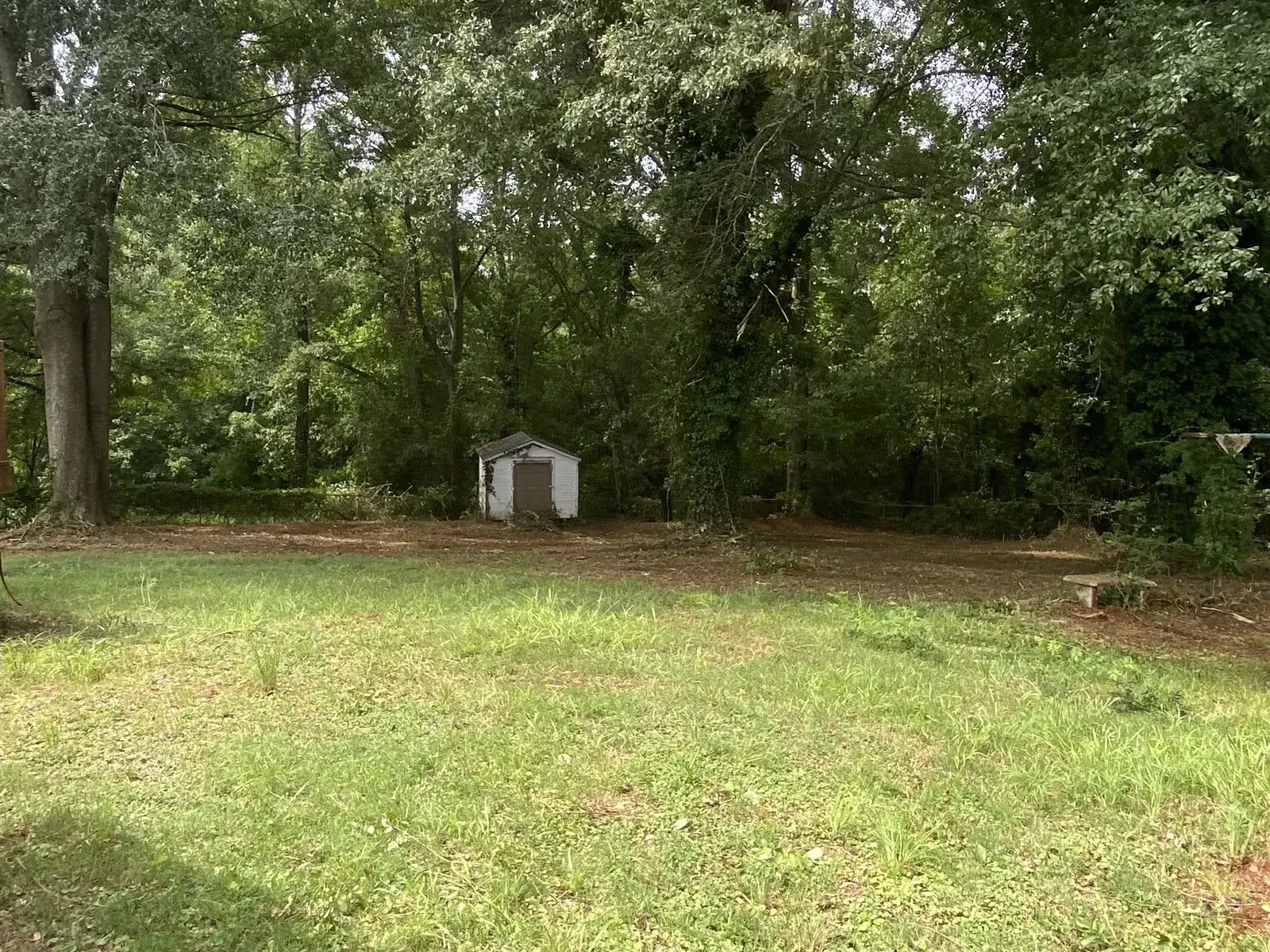
Those ranges are market data, and we price each pad after we see it. Our shed pad and building pad grading covers the dirt side of the job around Shelby. We clear the spot, cut and fill it level, then pack it down. A stone supplier delivers the gravel, and we spread and compact it.
What does a gravel shed pad cost by size?
Published cost data puts a gravel shed pad at about $320 to $2,400 by size, per Angi’s 2026 table. An 8 by 10 foot pad runs $320 to $800. A 12 by 20 foot pad runs $960 to $2,400. Angi calls pad size the single biggest cost driver on this job.
Angi’s 2026 table prices four common pad sizes.
| Pad size | Square feet | Angi 2026 range |
|---|---|---|
| 8 by 10 feet | 80 | $320-$800 |
| 10 by 12 feet | 120 | $480-$1,200 |
| 12 by 16 feet | 192 | $770-$1,920 |
| 12 by 20 feet | 240 | $960-$2,400 |
Every row works out to about $4 to $10 per square foot. Angi says installers typically charge $3 to $8 per square foot, or $50 to $100 per hour. It also notes that minimum service fees may apply. That can make a small pad cost more per square foot.
The pad is bigger than the shed. Angi says most shed pads are built 12 to 24 inches beyond the walls on each side. A 10 by 12 shed with a foot of stone on every side needs a 12 by 14 pad. That is 168 square feet, which falls between Angi’s 10 by 12 and 12 by 16 rows.
How thick should a gravel shed pad be?
Four to six inches of stone is enough for most home sheds, per Angi. Its guide lists standard pad thickness as four, six or eight inches. Heavier sheds and poor soil call for the thicker end. Angi says added depth can raise the total by $1 to $4 per square foot.
Depth sets how much stone the supplier brings. HomeGuide says one cubic yard of stone weighs 1.4 to 1.5 tons. A 12 by 14 pad at 4 inches deep holds about 2 cubic yards, or roughly 3 tons. At 6 inches, the same pad takes about 3 cubic yards, or roughly 4.5 tons.
HomeGuide lists crusher run at $24 to $34 a ton and road base at $18 to $30 a ton. At those prices, 3 tons of crusher run comes to about $72 to $102. The supplier’s delivery charge is extra. Your stone yard sets the real price.
What kind of gravel goes under a shed?
Crusher run is one option for the stone under a shed, and the shed seller can tell you what it wants under its building. Crusher run is crushed stone mixed with sand and stone dust. HomeGuide says it compacts extremely well, which gives the shed a hard, flat bed. Order the stone the seller names from your supplier.
Stone with very little fine material packs differently. The FHWA’s gravel roads guide says that kind of stone will not form a crust on top, so it stays looser than crusher run.
Driveway stone is its own topic. Our gravel driveway cost guide covers crusher run and 57 stone on a drive.
Why does red clay matter under a shed pad?
Much of the ground around Shelby is Piedmont red clay, and a shed pad sits right on it. In the USDA’s typical Cecil profile, red clay starts about 8 inches down. The USDA describes that clay as firm, sticky and plastic. A level cut into a slope can reach it on the high side.
The low side is filled, and loose fill settles later and leaves a dip. Angi says proper grading and compaction prevent settling. It also suggests a thicker base on soft ground. So we pack the fill in layers and check the pad for level before any stone arrives.
Weather sets the schedule on clay. NOAA’s climate normals give Shelby 47.89 inches of rain in a normal year. Soaked clay ruts under machines. A wet week can move the date, and we set that date after the estimate.
What moves the price of a gravel shed pad?
Pad size and the ground under it set most of the price. Angi lists slopes, tree or brush removal and poor soil as site conditions that add labor. Tight access for machines and the stone truck can raise the price. Tearing out an old shed or foundation first adds cost too.
The rest comes from the job itself.
- Slope. Angi says sloped or uneven ground adds labor. On a hillside, one side gets cut and the other gets filled and packed.
- Clearing. Trees, stumps and brush come off the spot before any grading. Our grapple trucks haul the brush off.
- An old building. If an old shed stands where the new one goes, shed removal comes first. Angi says removing old foundations or debris adds disposal charges.
- Access. Angi says limited access for equipment and material delivery can raise pricing. A fenced back yard may call for a tracked skid steer or a mini excavator.
- Stone. Depth and stone choice set the tonnage. HomeGuide puts bulk crushed stone and gravel at $10 to $50 a ton on average.
- Bigger pads. Angi puts site preparation for a 1,000 square foot shed pad at about $1,500. HomeGuide lists excavating a dirt pad for a driveway, patio or deck at $1,000 to $2,500.
- Bigger grading jobs. A pad cut into a steep hill is closer to a regrade. Our land grading cost guide covers that work by project.
Do you need a permit for a shed in North Carolina?
Check with the county before the shed is ordered. Under G.S. 160D-1110, no one may start building a structure without first securing the permits the state building code requires. The county answers whether your shed needs one. In Cleveland County, Building Inspections takes applications and gives permit instructions at 980-484-4997.
The Cleveland County office is at 1333 Fallston Road in Shelby. In Gaston, Lincoln or Rutherford County, call that county’s inspections office.
Digging has its own rule. Under G.S. 87-122, NC 811 needs notice three full working days before work starts. Call before any machine cuts into the ground.
How does a gravel shed pad job work?
A gravel shed pad job starts with a free on-site estimate, and we set a date after it. The spot gets cleared, then cut and filled to level and compacted. The supplier delivers the stone to the site. We spread it to depth, compact it and check it for level.
At the estimate, we look at the slope and the pad size you want. We also check where a delivery truck can reach. If brush or trees cover the spot, our forestry mulcher or a root grapple clears it first.
Our dirt work machines do the grading. A dozer or a tracked skid steer cuts the high side and moves that dirt to the low side. On a tight lot, a mini excavator does the same job. One customer spent years fighting a sloped yard for an above ground pool. We had it graded flat in a day.
Fill goes down in layers, and each layer gets packed. Then the supplier’s truck drops the stone, and a skid steer spreads it. We compact the stone and check the pad again. If you want a concrete slab, other trades pour it after our pad prep. The shed goes on once the pad is done.
Getting a spot ready for a new shed? Call (704) 600-8146 or book a free on-site estimate. LDS Solutions is veteran owned and fully insured. We work from Shelby, about 25 miles out into Cleveland, Gaston, Lincoln and Rutherford counties.